Treatment for Abnormal Vaginal Bleeding Menopause
| Category |
Treatment for Abnormal Vaginal Bleeding Menopause |
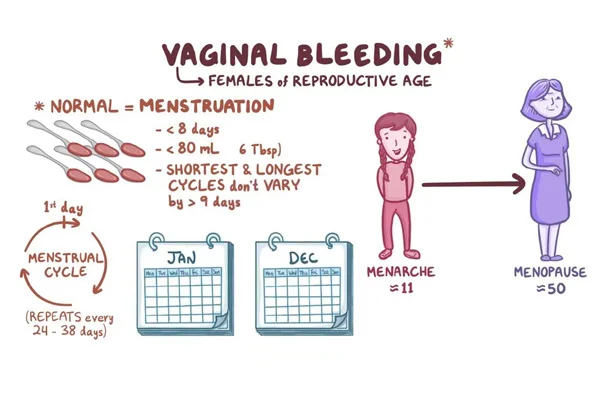
Many women experience abnormal vaginal bleeding or spotting between periods sometime in their lives.
Vaginal bleeding is considered to be abnormal if it occurs:
- When you are not expecting your menstrual period.
- When your menstrual flow is lighter or heavier than what is normal for you.
- At a time in life when it is not expected, such as before age 9, when you are pregnant, or after menopause.
Causes of abnormal bleeding
Abnormal vaginal bleeding has many possible causes. By itself, it does not necessarily indicate a serious condition.
- Because bleeding can mean a problem with pregnancy, possible pregnancy should always be considered in a woman of childbearing age.
- Spotting to minimal bleeding may be normal. But any bleeding during pregnancy needs to be evaluated by your doctor.
- Heavy vaginal bleeding or bleeding that occurs before 12 weeks may mean a serious problem, including an ectopic pregnancy or miscarriage.
- Heavy vaginal bleeding or bleeding that occurs after 12 weeks also may mean a serious problem, such as placenta previa.
- Ovulation can cause mid-cycle bleeding.
- Polycystic ovary syndrome (PCOS) is a hormone imbalance that interferes with normal ovulation and can cause abnormal bleeding.
- Medicines, such as birth control pills, sometimes cause abnormal vaginal bleeding. You may have minor bleeding between periods during the first few months if you have recently started using birth control pills. You also may have bleeding if you do not take your pills at a regular time each day. For more information, see the topic Birth Control.
- An intrauterine device (IUD) also may increase your chances of spotting or heavy periods. For more information on the IUD, see the topic Birth Control.
- Infection of the pelvic organs (vagina, cervix, uterus, fallopian tubes, or ovaries) may cause vaginal bleeding, especially after intercourse or douching. Sexually transmitted infections (STIs) are often the cause of infections. For more information, see the topic Sexually Transmitted Infections.
- Pelvic inflammatory disease (PID) causes inflammation or infection of the uterus, fallopian tubes, or ovaries, which can cause abnormal bleeding.